

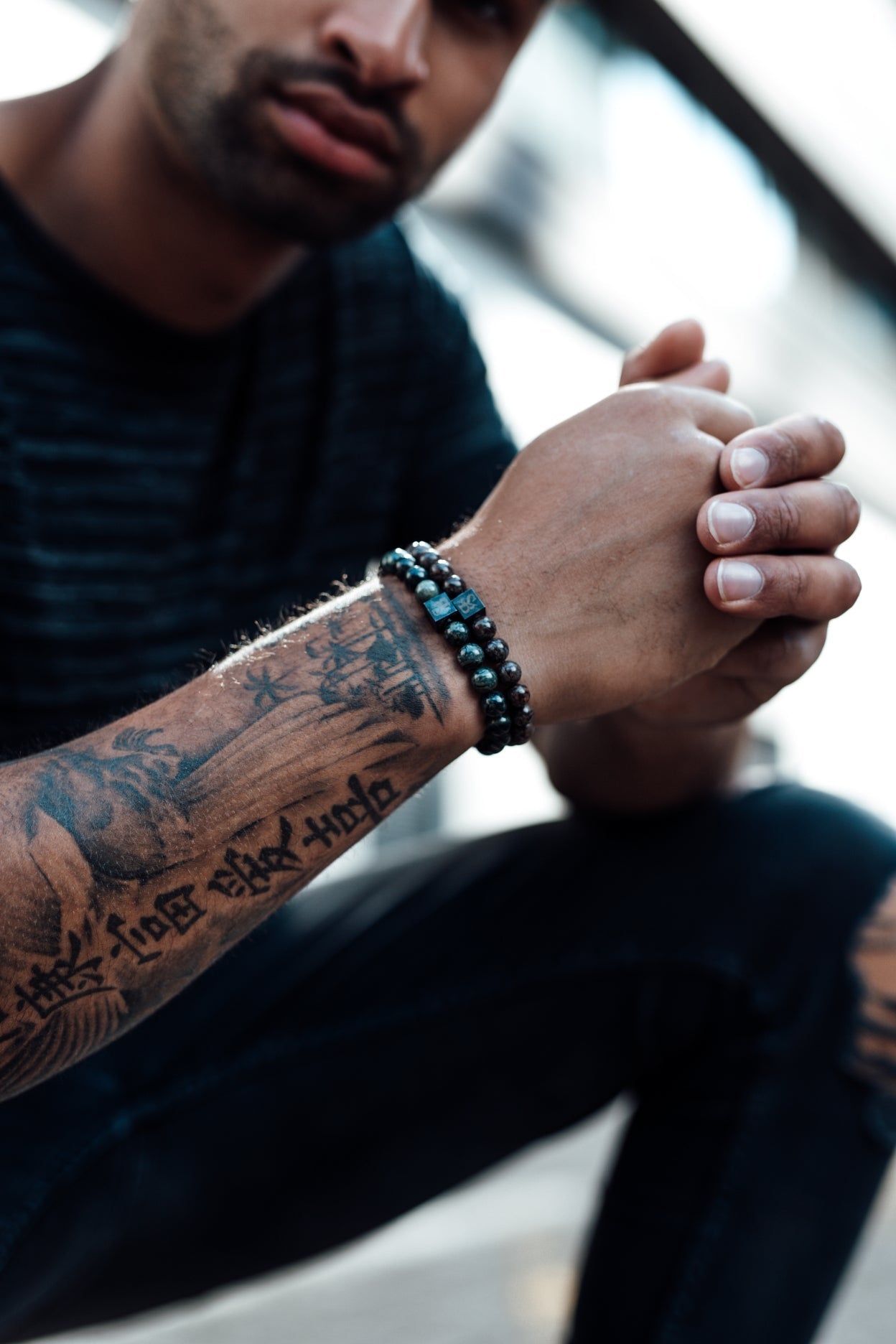
Silver-colored is not the same as silver. A large portion of what is sold online as "silver jewelry" is silver-plated metal or a shiny alloy that discolors after a few weeks. You can recognize real silver by a handful of straightforward checks you can do yourself, without a laboratory. If you want to be sure that your bracelet contains real silver, first look at our bracelets with silver and use these six tests.

What "real silver" actually means
Pure silver of 99.9 percent is too soft for jewelry. Therefore, it is alloyed into sterling silver: 92.5 percent silver with 7.5 percent other metal, usually copper, for strength. That's where the number 925 comes from. If you see 925, S925, or the word Sterling, you are dealing with real silver.
Silver-plated is something entirely different. It has a thin layer of silver over a base metal of brass or nickel. It looks identical at first, but the top layer wears off, and the base comes through. Silver-colored alloys contain no silver at all, only a shiny finish. The difference in quality is significant: from an alloy that dulls in weeks, to solid 925 sterling silver that retains its character for years.
Four properties that reveal real silver
Six checks to identify real silver
No single test is conclusive on its own. Do two or three in a row, and the picture quickly becomes clear. This is the order we follow ourselves for incoming materials.
| Check | What you do | Real 925 silver | Fake or silver-plated |
|---|---|---|---|
| Hallmark | Look for a 925, S925 or Sterling stamp | Stamp present | No stamp or only a brand name |
| Magnet | Hold a strong magnet to the piece | No attraction | Attracts if iron or steel in core |
| Cold test | Place an ice cube on the metal | Melts quickly, silver conducts heat well | Melts noticeably slower |
| Weight | Weigh by hand against a known silver piece | Feels heavy and solid | Surprisingly light |
| Smell | Sniff the metal briefly after rubbing | Almost odorless | Distinct metallic or copper smell |
| Polishing cloth | Gently rub with a white cloth | Light gray tarnish on the cloth | No reaction or top layer comes off |

Silver-plated, real silver, or silver-colored
Most confusion arises because three completely different materials look identical in photos. Here's how to distinguish them.
| Material | What it is | How long it stays nice | How to recognize it |
|---|---|---|---|
| 925 sterling silver | Solid silver, 92.5 percent pure | Years, tarnish can be polished off | 925 stamp, heavy, non-magnetic |
| Silver-plated | Thin silver layer over brass or nickel | Months to a year, layer wears off | Lighter, spots where the base shows through |
| Silver-colored alloy | No silver, just shiny finish | Weeks to months, dulls | Very light, no stamp, often magnetic |
We don't look at how shiny something is when it arrives, but how it behaves after a month of wear. That separates real silver from a beautiful coating.
Stoney AtelierWhen you want to be sure
The checks above will generally get you far enough. If there's still doubt, there are two definitive methods, both performed by a jeweler or precious metal dealer. The first is the acid test: a drop of nitric acid on an inconspicuous spot will turn creamy white on real silver, while base metal will turn green. Because the test damages a tiny spot, it's best left to a professional.
The second and most accurate method is XRF analysis: a handheld device that uses X-rays to measure the exact metal composition without damaging the jewelry. Many jewelers and buyers have such a meter. If you don't want to take that step, ask the seller about the hallmark and origin. An honest seller will state both without hesitation, just as we do for every stone and every silver accent.
How it is at Stoney
We do not make solid silver chain bracelets, but gemstone bracelets with real silver accents. Our Superior line combines a natural stone of your choice with two handmade 925 sterling silver beads. Not silver-plated imitation that dulls after a few weeks, but real silver with a hallmark. The Superior line is unisex and available in 6mm and 8mm, so you can match the bead diameter to your wrist.
If you want the silver-gray look without metal, hematite is a strong choice. This is a natural stone with a metallic silver-gray surface that approximates the shine of silver and does not tarnish. The same honesty we apply to stones applies to metal: we state exactly what you get.
Does your silver turn dark after a while? That doesn't mean it's fake. Real 925 silver oxidizes and slowly changes color. Silver-plated metal often does this less, because the thin top layer simply wears off instead of tarnishing. Tarnish can be polished away in a few minutes with a silver polishing cloth.
Keeping real silver beautiful
Real silver requires little, but it does require the right care. These five rules will maintain its shine for years. You can read more about caring for gemstones and metal together in our guide on keeping your bracelet beautiful.
- Store silver dry and separately, preferably in an anti-tarnish bag.
- Keep it away from perfume, hairspray, and chlorinated pool water.
- Polish away tarnish with a silver polishing cloth, never with abrasive cleaners.
- Wear your silver regularly, as skin contact slows down oxidation.
- Remove jewelry before showering and exercising to prevent soap residue.
First, look for the 925 or Sterling stamp. Then test with a magnet and feel its weight and coolness. If the piece passes all three, you almost certainly have real silver. If you're still in doubt, ask the seller about the hallmark and origin. An honest seller will state this without hesitation.
Real silver, honestly stated
Gemstone bracelets with handmade 925 sterling silver accents. Selected in our own studio.
View the collection 20,000+ customers · 1,800+ reviews · 4.8 average
Carnelian Bracelet: The Warm Orange-Red Stone for a Masculine Stack
Silver vs. Gold Jewelry: The Honest Difference in Color, Price, and Maintenance