

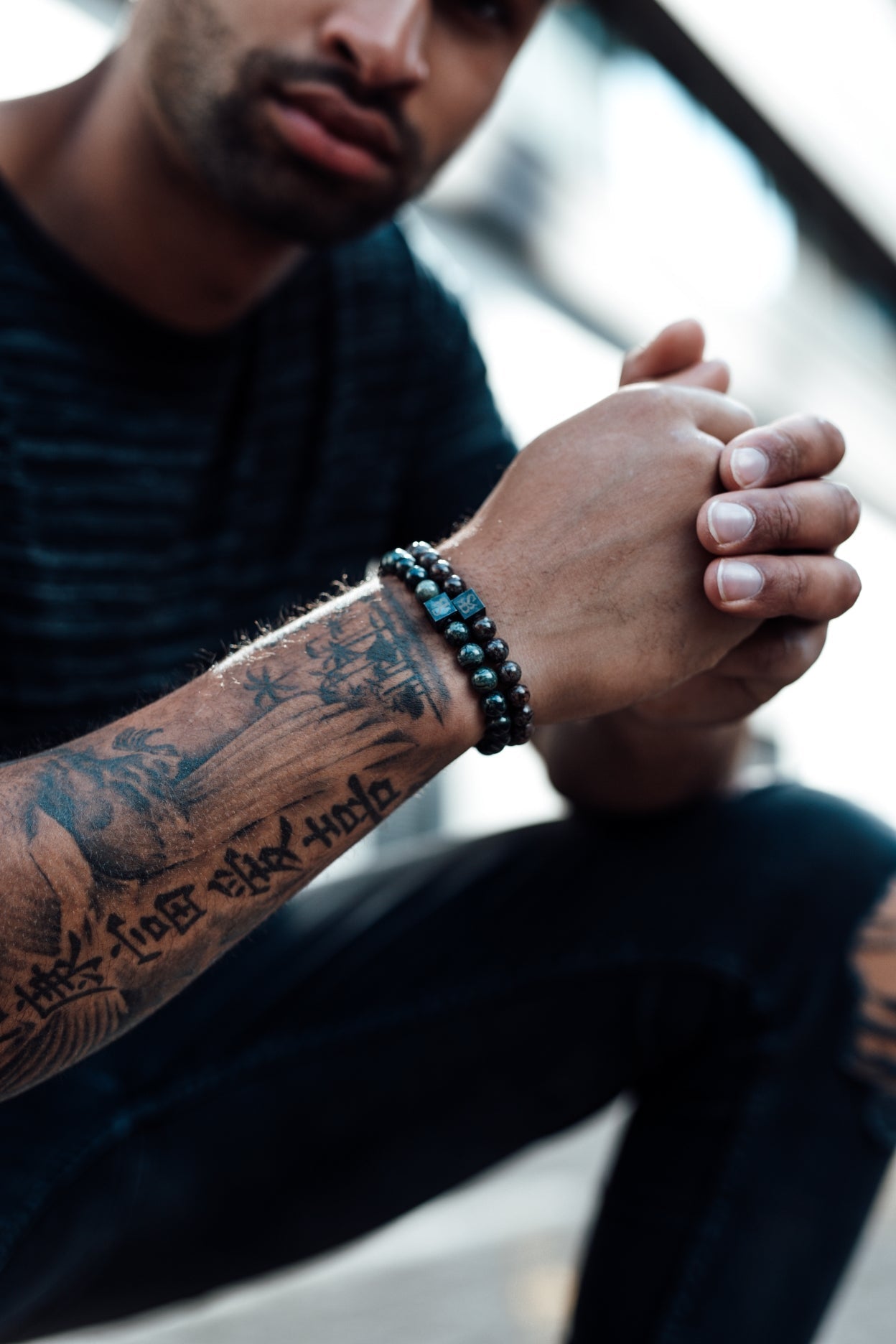
Pick up a hematite bracelet and you'll feel it immediately: this is no ordinary stone. Hematite is strikingly heavy for its size — almost twice as heavy as most gemstones. That density is not accidental. Hematite is an iron oxide mineral that has been mined, worn, and valued for thousands of years. In this guide, you'll discover exactly what hematite is, how to recognize it, and why it's one of the most versatile stones in the Stoney Bracelets collection.

What exactly is hematite?
Hematite (Fe₂O₃) is a mineral consisting of about 70% iron. The name comes from the Greek word haima, meaning blood. That sounds strange for a silver-colored stone, but rub hematite over a rough surface and you'll see it: a deep red streak. That same red color gave the planet Mars its name — its surface contains enormous amounts of hematite.
As a jewelry stone, hematite is always polished. This gives it that characteristic metallic luster: dark gray, almost mirror-like, with a weight you immediately feel on your wrist. It's not a stone that screams for attention. It's a stone you notice when you pick it up.
How to recognize real hematite?
There are three ways to distinguish hematite from imitations. The first is weight: hematite is significantly heavier than similar stones like onyx or obsidian. Hold two bracelets side by side and the difference is unmistakable.
The second is the streak test. Scratch the stone over unglazed porcelain (the bottom of a coffee cup works). Real hematite leaves a reddish-brown streak. Ceramic or plastic imitations do not.
The third is temperature. Hematite feels cool to the touch and warms up slower than plastic or glass. That's the iron you're feeling.

Hematite versus other dark stones
Hematite is often confused with obsidian and onyx. All three are dark, all three are popular in men's bracelets. But the differences are greater than you might think.
| Property | Hematite | Obsidian | Onyx |
|---|---|---|---|
| Color | Silver-gray, metallic | Deep black, glossy | Matte to glossy black |
| Weight | Very heavy (5.3 sg) | Average (2.4 sg) | Average (2.6 sg) |
| Origin | Iron ore, worldwide | Volcanic glass | Layered chalcedony |
| Hardness (Mohs) | 5.5 – 6.5 | 5 – 5.5 | 6.5 – 7 |
| Unique feature | Metallic luster, high weight | Glassy fracture | Even color, matte surface |
Obsidian is volcanic glass — lighter, more brittle, and with a deep luster. Onyx is a form of chalcedony with an even, matte appearance. Hematite is in between: it combines the dark tone with a metallic character not found in either of the others. Want to know more about our hematite bracelets? Check out the hematite bracelet guide.
The best combinations with hematite
Hematite is one of the most versatile stones we know. Its neutral, metallic shade matches almost any other color without dominating. These are the three combinations our customers order most often.

Caring for Hematite
Hematite is sturdy enough for daily wear, but iron and water are not friends. Keep your hematite bracelet dry. That means: take it off before showering, swimming, or exercising. Sweat is less problematic than immersion, but wipe your bracelet with a dry, soft cloth after an intense day.
| Situation | Advice |
|---|---|
| Daily wear | No problem. Wipe weekly with a dry cloth. |
| Showering / swimming | Always remove. Water accelerates iron oxidation. |
| Sport / sweat | Brief contact is okay. Wipe dry after exercise. |
| Storage | Separate from other stones. Hematite can scratch softer stones. |
| Cleaning | Lightly damp cloth, wipe dry immediately. No soap or chemicals. |
Hematite is one of the few stones where its weight is part of the experience. You feel it all day long.
Stoney Bracelets — Atelier6mm or 8mm: which size hematite?
At Stoney, we offer hematite in 6mm and 8mm beads. The choice depends on your wrist size and style preference. For thin wrists (under 17cm), 6mm beads are proportionally better. Wider wrists (18cm+) can easily wear 8mm.
Hematite is heavier than most stones, so 8mm hematite feels noticeably more substantial than 8mm tiger's eye or obsidian. For some wearers, that's precisely why they choose it — and for others, a reason to stick with 6mm. If in doubt, try the 6mm variant first. The weight will surprise you.
Hematite is an iron oxide mineral with a unique metallic sheen and remarkably high weight. A hardness of 5.5-6.5 Mohs makes it suitable for daily wear. Avoid prolonged contact with water. Combine with tiger's eye for warmth, obsidian for depth, or lapis lazuli for color. A stone for those who prefer subtle presence over striking color.
Feel The Difference
Discover hematite bracelets with the characteristic Stoney cube. Handmade, with hand-selected stones.
View the collection 20,000+ customers · 1,800+ reviews · 4.8 average
Men's Beaded Bracelets: 6 Styles, Choose Yours
Lapis Lazuli Bracelet for Women: Deep Blue With Character