

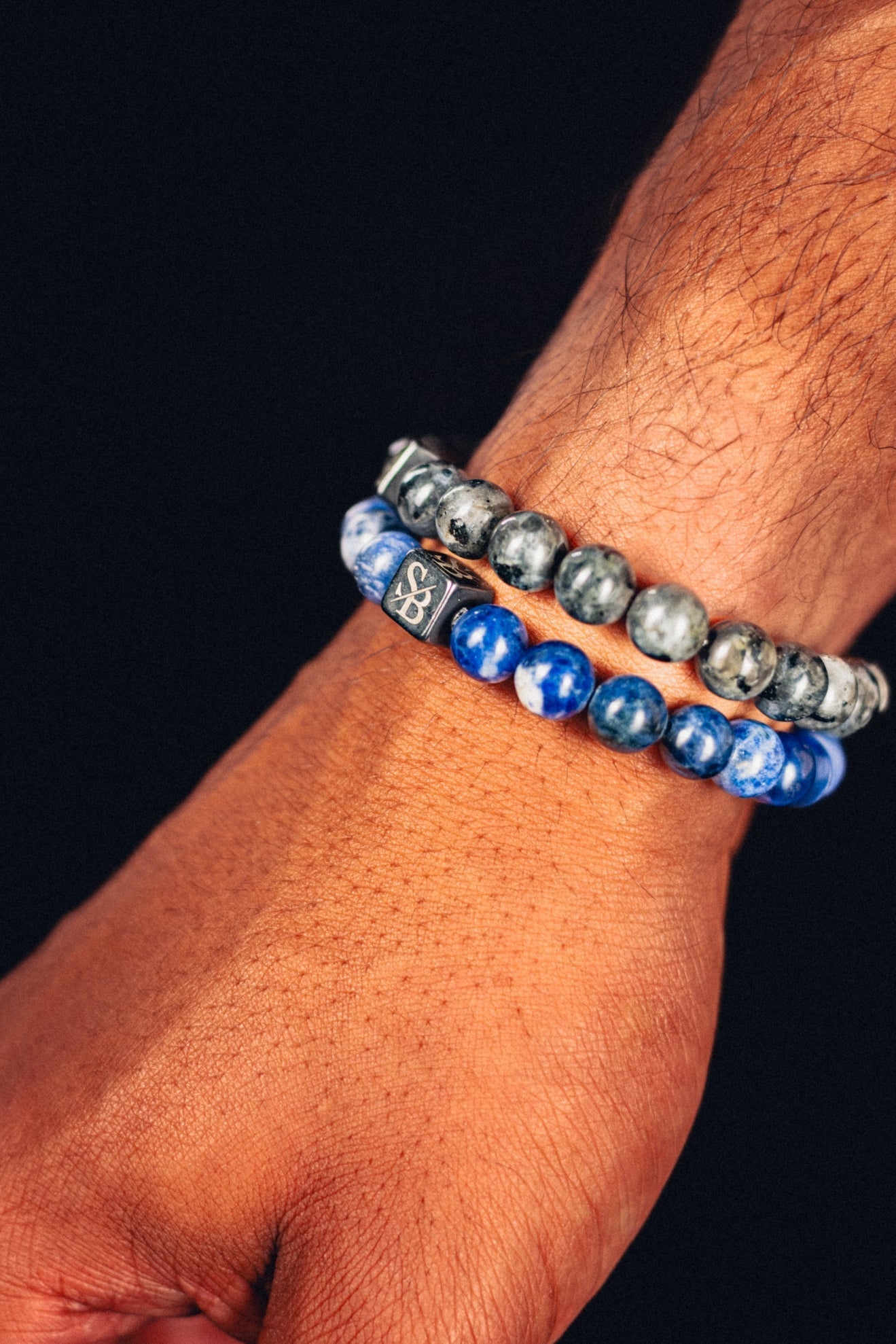

Pharaohs wore it. Renaissance artists ground it into precious pigments. Traders waged wars for it. Lapis lazuli is not just a stone—it is a witness to humanity's richest cultural history.
This deep indigo blue stone, speckled with golden pyrite, has been cherished for over two millennia as a symbol of power, wisdom, and spiritual enlightenment. From Cleopatra to medieval Europe, from Buddhist temples to Islamic manuscripts: lapis lazuli appears in almost every major civilization.
In this article, we explore the meaning, history, and cultural symbolism of lapis lazuli—and what this deep blue jewel can still tell us today. Discover our complete lapis lazuli collection here.
The Ancient World: Power and Divinity
Lapis lazuli mainly occurs in Badakhshan, in present-day Afghanistan—a region that has been the primary source for over 6,000 years. The trade routes between Asia and the Mediterranean actually revolved around three things: silk, spices, and lapis lazuli.
In Ancient Egypt, lapis lazuli was carved into scarabs, amulets, and inlays for burial chambers. The Egyptians called it "heaven stone" because it had the color of the night—and thus the domain of the gods. Cleopatra knew it: archaeologists have found lapis lazuli powder in her tomb, likely used as eye makeup.
"The Egyptians believed that lapis lazuli brought the wearer into direct contact with the divine. It wasn't just decoration—it was spiritual power in tangible form."
In Mesopotamian civilizations, lapis lazuli was used for royal seals, temple sculptures, and ritual objects. Its value was immense: in ancient trade documents, it was weighed like gold.
The Renaissance: The Blue of the Masters
Fast forward to Renaissance Europe. Artists like Michelangelo and Leonardo da Vinci had one obsession: the perfect blue. Lapis lazuli was finely ground into ultramarine—the most expensive pigment in the world. A gram of ultramarine cost more than gold by weight.
This pigment appears in the skies of the greatest masterpieces: Michelangelo's Sistine Chapel, Botticelli's 'Birth of Venus.' Painters had to consult their wealthiest patrons—popes, princes, merchant magnates—before using lapis lazuli in a work. It wasn't just art; it was an investment.

Cultural Meanings Through the Ages
Connection to heaven and gods; protection of the soul in the afterlife
Used in ritual objects, burial chambers, and amulets for pharaohs and nobles
Wisdom, truth, and intellectual enlightenment; widely used in manuscripts
Lapis lazuli ink in sacred texts; jewelry for scholars and sages
The heavenly blue; symbol of Mary and divine aspects in painting
Value comparable to diamonds; only for the richest patrons and monarchs
Communication, self-expression, and inner truth; wearable piece of history
Highly valued by collectors, art lovers, and men of taste
Where Does Lapis Lazuli Come From?
Almost all lapis lazuli on the market comes from Badakhshan, Afghanistan. This mountainous region holds the best reserves of the mineral in the world. Other sources include Chile, Russia, and Kashmir, but Afghan lapis lazuli remains the most sought after due to its deepest color and purest composition.
Mining is manual and traditional—the same methods used thousands of years ago. Workers extract the stone from rock formations, carefully break it out, and ship it to the world. This isolated geographical source makes lapis lazuli relatively scarce and therefore all the more precious.
If you are interested in the history of gemstone jewelry and their meaning, also read our articles on jewelry meaning and bracelet meaning.
We present lapis lazuli's historical and cultural significance as an educational and spiritual framework. This is not a medical or therapeutic claim. The value of wearing lapis lazuli lies in its connection to history, self-worth, and personal style.
Lapis Lazuli Combinations in Bracelets
In our workshops, we combine lapis lazuli with complementary stones. Each match creates a different story:
Heavenly stone meets grounding. Lapis lazuli's spiritual blue is balanced by obsidian's protective black. This is integrity in bracelet form.
Discover moreWisdom radiating through grounding. Hematite's shiny black-gray adds subtle elegance to lapis lazuli's deep blue. A statement combination for men with an eye for detail.
Discover moreTwo stones connected by the nocturnal spectrum. Moonstone's opalescent shimmer against lapis lazuli's cosmic blue creates an almost unnatural balance.
Discover moreLapis Lazuli in Your Life Today
You're not just wearing a piece of history around your wrist. Lapis lazuli in a bracelet is a daily touchpoint with:
- Self-awareness: Every time you see your wrist, you remind yourself of your preference for quality, culture, and meaning.
- Conversation: Lapis lazuli attracts eyes. People will ask what you're wearing. And then you'll tell the story.
- Intention: The same material worn by pharaohs, painted by masters, sent between the wealthiest merchants—that's now on you.
- Calm: The color alone is calming. Research shows that certain shades of blue reduce stress.

Frequently Asked Questions about Lapis Lazuli
Why is lapis lazuli so precious?
Lapis lazuli is scarce. It is primarily sourced from one mountain range (Badakhshan, Afghanistan), and mining it is difficult. Furthermore, the stone boasts 6,000 years of historical value and divine esteem. It wasn't made precious—it has always been precious.
How do you distinguish real lapis lazuli from fake?
Real lapis lazuli has natural pyrite inclusions (golden-yellow specks) and irregular color distribution. Fake versions are too uniform and lack genuine glitter. Real lapis lazuli also feels heavier and scratches more easily than synthesized versions. At Stoney, we buy directly from reliable Afghan suppliers.
Is lapis lazuli suitable for daily wear?
Yes, but with care. Lapis lazuli is not hard (5–5.5 on the Mohs scale). It can scratch and chip from rough handling. Wear it as a daily piece, but avoid prolonged direct contact with water or aggressive cleaning agents. Our jewelry is designed for careful daily use.
Can men wear lapis lazuli without feeling it's 'too much'?
Absolutely. Lapis lazuli in a bracelet is subtle and masculine. The color is deep—not flashy. It feels elegant and classic, not ostentatious. Many strong men (businessmen, artists, collectors) wear it as a statement of preference, not ostentation.
What is the difference between lapis lazuli and other blue stones?
Lapis lazuli is a mineral mixture (primarily lazurite), not a pure crystal like sapphire. This gives it its unique deep blue with golden specks. Sapphire is harder and purer in color. Aquamarine is lighter. Lapis lazuli is known for feeling the most luxurious—it has history.
Wear Millennia of Meaning
Our lapis lazuli bracelets are crafted with the same dedication as the ancient masters. Each stone is hand-selected. Every bead is intentional.
Discover Our Collection Free shipping on orders over €75
Silver Bracelets: Three Silver Options Honestly Compared
Create Your Own Bracelet Stack: Bundle Builder and Four Ready-Made Sets