

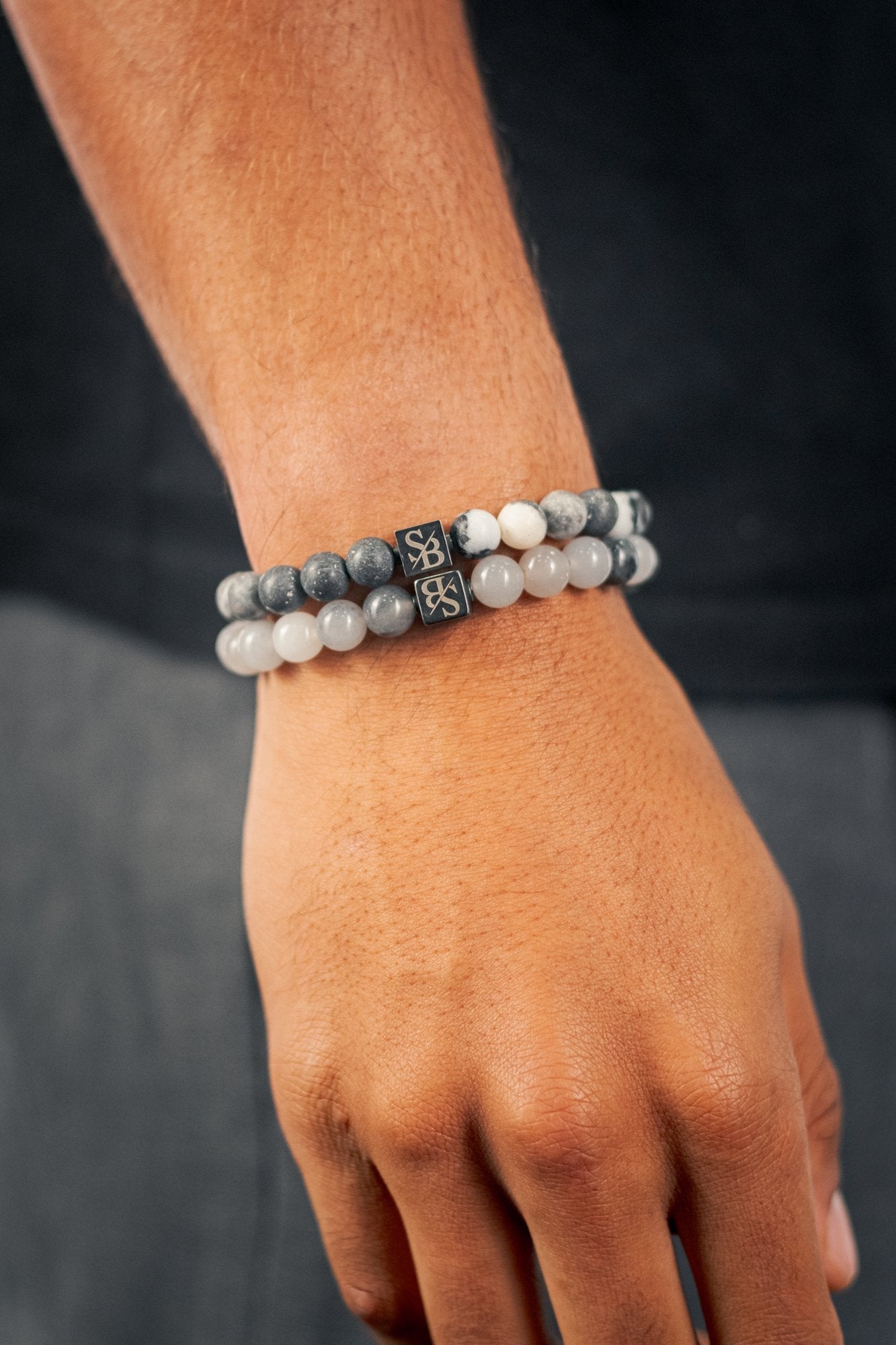
Adularescence is the optical effect that gives a moonstone its characteristic glow. No glitter, no coating, no polished layer. A purely natural light phenomenon that occurs in the stone's crystal structure. Those who know the difference between real adularescence and imitation also understand why one moonstone bracelet is worth ten times more than another.

What adularescence precisely is
Adularescence is the soft, bluish-white shimmering light that appears to move across the surface of a moonstone as you turn it. The term comes from adularia, a feldspar variety in which the effect was first described in the Adula Massif in Switzerland.
It is not a color. It is not a reflection. It is iridescence: light refracted within the stone by extremely thin layers of two different feldspars that have grown together. The more regular these layers, the stronger the effect.
How the glow originates within the stone
Moonstone consists of two feldspars: orthoclase and albite. At high temperatures, they form one homogeneous mass. During slow cooling in the Earth's crust, they separate again into alternating layers of nanoscale thickness. White light entering the stone is refracted and scattered by these layers. The result is the luster that appears to be deeper than the surface.
Adularescence versus Labradorescence versus Opalescence
Three related optical effects are often confused. They all arise from the interference of light in a layered crystal structure, but the mineral and the visual result differ.
| Effect | Mineral | Color spectrum | Mohs |
|---|---|---|---|
| Adularescence | Moonstone (orthoclase/albite) | Bluish-white, soft, monochromatic glow | 6 - 6.5 |
| Labradorescence | Labradorite (plagioclase) | Peacock blue, green, gold, purple; rich play of colors | 6 - 6.5 |
| Opalescence | Opal (hydrated silica) | Milky light with rainbow flashes | 5.5 - 6.5 |
| Aventurescence | Sunstone (oligoclase) | Golden sparkle due to copper inclusions | 6 - 6.5 |
In short: adularescence is calm and almost spiritual in nature. Labradorescence is theatrical and colorful. If you want to know more about moonstone's cousin, read the labradorite bracelet guide which describes labradorescence in detail.

How to recognize real adularescence on your wrist
Between synthetic moonstone, opalite (colored glass) and dyed ordinary feldspar, there is a lot of junk in circulation. Five concrete checks you can do in 30 seconds, with or without a magnifying glass.
- Movement test. Tilt the bracelet 90 degrees under a light source. The bluish-white glow must move across the bead. Static effect = imitation.
- Depth check. Hold one bead against the light. Real adularescence appears to come from within the bead, not from the surface. With opalite, the effect lies flat on the outside.
- Temperature test. Moonstone is naturally cool to the skin and warms up slowly. Glass imitations are immediately lukewarm and feel lighter.
- Irregularity check. No two natural moonstone beads are identical. A bracelet with a perfectly uniform glow in every bead is almost certainly treated or synthetic.
- Nail scratch test. Moonstone scores 6 - 6.5 on Mohs. A steel nail (Mohs 4) leaves no scratch. Glass (Mohs 5.5) is easier to scratch.
A real moonstone changes character depending on how the light falls. A fake moonstone always looks the same, and that's what gives it away.
Stoney AtelierHow we check every moonstone before it goes into a bracelet
Every moonstone bead that Stoney processes goes through four manual selection steps. No mass production, no blind purchasing by the kilo. What our studio supplier rejects is returned.
- Visual rotation control. Each bead is rotated 360 degrees under daylight. Beads without a clear shifting glow are rejected, regardless of price.
- Hardness sample test. Per batch, we test three beads with a Mohs kit. A result below 6 means the entire batch is imitation, not feldspar.
- Shape uniformity within acceptable limits. Beads may vary in glow intensity, but the spherical shape and bead diameter must remain within a 0.1 mm tolerance.
- Stoney final inspection. Before we close the bracelet, we place it next to four previously approved models. One deviant bead and it goes back.
Adularescence is not a marketing trick and cannot be faked without being noticeable. The glow in a moonstone immediately tells you whether you are looking at a real natural stone or dyed glass. Our moonstone collection is selected based on this exact criterion, which is why every bracelet feels just a little different from the last.

Do you want to know which moonstone bracelet best suits your style, with combination advice per profile? Then read our complete guide to the moonstone bracelet. Here, we focus purely on the material.
Feel the difference yourself
Every moonstone we process has natural adularescence. No coating, no dye. Pure feldspar with a glow embedded in the stone.
View Moonstone Bracelets 20,000+ customers · 1,800+ reviews · 4.8 average
Black stack for men: this is how you build a stack that always works
Women's Wedding Bracelet: the right bracelet for the bride and guests